

Passivation of stainless steel is a controlled chemical treatment, usually in citric or nitric acid, that removes free iron and surface contamination left by machining, handling or fabrication. With that contamination gone, the chromium oxide layer that makes stainless “stainless” can re-form evenly across the part. It is not a coating, and it adds no visible thickness.
What passivation of stainless steel is (and isn’t)
Stainless steel resists corrosion because chromium in the alloy reacts with oxygen to form a passive film. This chromium oxide film is only about 1–3 nanometers thick, and it forms on its own whenever a clean surface meets oxygen. If it is scratched, it re-forms, provided the surface underneath is clean and the environment supplies enough oxygen.
Passivation does not build that film by adding material. It cleans the surface so the film can form without iron particles sitting in it. ASTM A967 defines passivation as a chemical treatment of stainless steel with a mild oxidizing solution, such as nitric acid, whose purpose is to remove free iron or other foreign matter from the surface. ASTM A380 describes the same goal from the cleaning side: dissolving iron and iron compounds picked up from outside the alloy, without significantly attacking the stainless steel itself, so the protective film can form spontaneously.
That makes a passivated finish different from plating, paint or anodizing:
- Nothing is deposited. The part gains no measurable coating, so it does not grow in the way a plated part does.
- Dimensional change is negligible. The step does not eat into your machining tolerances, which is why a ground or turned diameter can be passivated without re-allowing for the finish.
- The look stays metallic. The surface looks cleaner or slightly duller, not coated, and a good passivated finish is hard to tell from an unpassivated one by eye. That is why it is verified by test, not by inspection.
Passivation also differs from the natural passivity of the alloy. Every stainless part forms some passive film in air. The point of the treatment is to remove the things that stop that film forming uniformly: iron picked up from tooling, embedded particles, residues and oxide from thermal processes.
Why machined stainless parts need passivation
Stainless steel is more than half iron. Chromium sits at the surface and does the protecting, but anything that puts bare iron on top of that surface defeats the protection locally.
Machining does exactly that:
- Tool and fixture iron. Cutting tools, chip handling and fixtures smear iron from other metals onto the part. Particles from steel tooling, steel wool or a shared deburring bin can become embedded in the surface.
- Smeared and cold-worked surface. Cutting, grinding and tumbling disturb the outer layer and can leave a fresh surface that has not yet formed a uniform film.
- Welding and laser cutting. Thermal processes add oxide and heat tint, and the chromium-depleted layer under the tint is weaker than the base metal.
- Handling. Contact with carbon steel racks, tables, wire brushes and abrasive media transfers iron.
Free iron rusts when it meets moisture. Each rust spot can become a starting point for staining or pitting, and on small precision parts such as fittings, pins and housings, even a few spots can mean a rejected lot or a contaminated fluid path.
If a part is not passivated, it may still perform acceptably in dry, mild service. The risks are flash rust, staining, pitting and contamination of whatever the part touches, and you lose the safety margin in humid or chloride-rich environments.
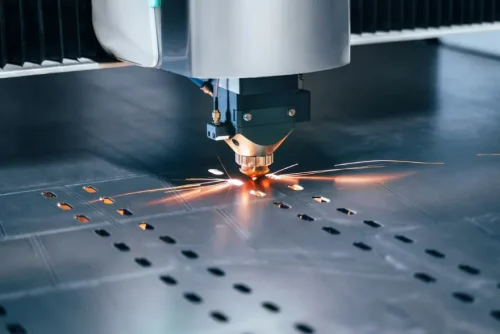
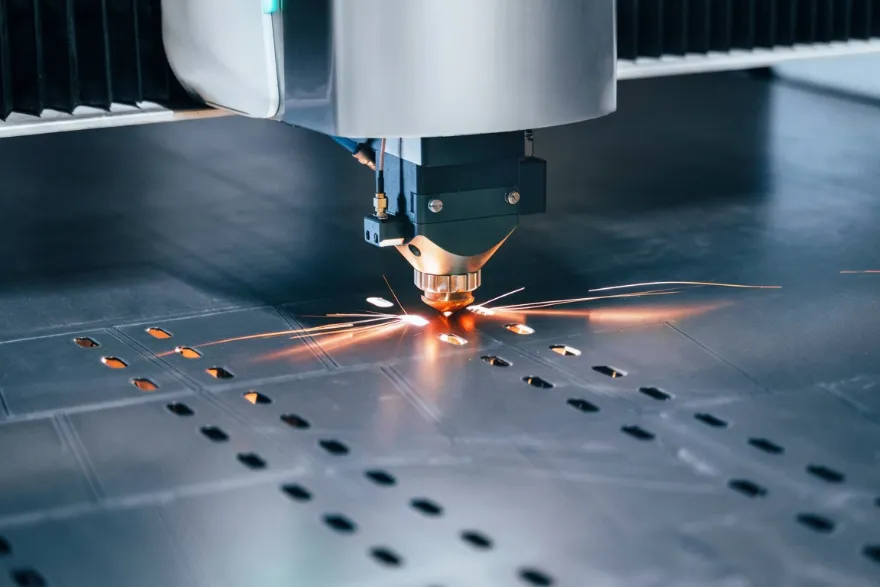
Heat tint on laser-cut stainless edges grows or shrinks with sheet thickness and assist gas, as the laser cutting thickness guide for stainless, aluminium and copper shows. That oxide band has to be removed by pickling or mechanical cleaning before passivation, because the acid bath alone will not take it off. Parts that start as sheet profiles from Laser Cutting and are then machined need this tint-removal step ahead of the passivation line.
When is passivation of stainless steel required?
Passivation is rarely a legal requirement. It becomes required when something in the chain says so:
- The drawing or specification calls for it. This is the most common reason. A note naming a standard and method makes it a contract requirement.
- The part will see moisture, washdown or process fluids. Fluid-handling parts, outdoor hardware and parts exposed to condensation gain the most.
- The part has been welded, ground or heavily machined. More surface disturbance means more chance of embedded iron.
- Cleanliness matters. Where rust particles would contaminate a fluid, a sensor or an assembly, removing free iron is cheap insurance.
- The grade is more vulnerable. Free-machining grades and parts with fine threads or blind holes hold contamination more easily.
It is often unnecessary for stainless parts used in dry, mild service where nobody has specified it and cosmetic rust would not matter. If you are unsure, state the service environment when you request a quote and ask whether the drawing should carry a callout.
How the passivation process works, step by step
- Clean and degrease. Remove cutting fluid, oil, fingerprints and swarf with a degreasing or alkaline wash.
- Pickle if needed. Parts with scale or heat tint go through pickling first.
- Acid bath. The part is treated in citric or nitric acid, which dissolves free iron and leaves the chromium in place.
- Rinse. Thorough rinsing, normally in clean water, stops acid residue from attacking the surface.
- Dry and test. Parts are dried and checked for free iron with the test your specification calls out.
Step 1 decides the result. Oil left on the part blocks the acid, so the iron underneath is never reached and the part passes through the bath still contaminated. Blind holes, threads and cross holes need agitation or flushing, since trapped oil or acid in a recess is a classic source of later staining.
Rinsing matters just as much at the other end. Acid left in a thread or crevice can keep working after the part leaves the line, so rinse quality and drying are part of the process, not an afterthought.
Tanks and pipe cannot be dipped, so they are treated in place by circulating the solution or applying a gel or paste.
Citric vs nitric acid: which passivation method?
Four routes appear in specifications. Most machined parts can go either citric or nitric, so the choice usually comes down to what the drawing says.
| Method | Where it fits | Watch-outs |
|---|---|---|
| Citric acid | Lower-hazard and increasingly common. Suits most machined stainless parts and mixed-alloy assemblies. | Confirm your specification accepts it. Pre-cleaning matters even more. Bath control (concentration, temperature, time) still has to be held. |
| Nitric acid (for example A967 Nitric 3) | Long-established. Fits where the specification names it, including some free-machining grades such as 303. | Hazardous to handle, and use and disposal are regulated. |
| Nitric acid with sodium dichromate (A967 Nitric 2) | Appears in older or specialized specifications. Dichromate inhibits attack on the sulfides in 303. | Hexavalent chromium is regulated and costly to handle and dispose of, so many shops avoid it. Verify with your specification before accepting it. |
| Electropolishing | Accepted electrochemical route for parts that also need a smoother, brighter surface. | A separate process with its own cost and lead time. It removes a thin layer of metal, so it can touch tight dimensions. |
Match the method to the grade and to the wording on your drawing. If the drawing is silent, the method is a decision your supplier makes for you, so say what you need.
Chemicals used in stainless steel passivation
The working chemicals are citric acid or nitric acid, with sodium dichromate added in some nitric methods, plus alkaline cleaners ahead of the bath and rinse water afterward. Pickling, when needed, uses stronger acid mixtures or pastes designed to remove oxide. That is a separate step with separate handling rules.
Bath life matters as much as chemistry. A bath carrying dissolved iron from earlier work can redeposit contamination on the next load, so ask how the supplier controls and refreshes it. Concentration, temperature and immersion time come from the method named in your standard.
Standards: A967, A380 and AMS 2700
ASTM A967 is the standard most drawings cite for passivation treatments. It lists the accepted methods, the pre-cleaning, and the tests to prove the surface is free of iron. ASTM A380 is a cleaning and descaling practice for stainless parts, equipment and systems. It describes how to remove grease, scale and iron contamination, and it is often paired with A967 or cited for fabricated systems. AMS 2700 is the aerospace-oriented passivation specification and is usually named when a customer’s quality documents require it.
Passivating 303: flash attack and sulfides
Free-machining 303 contains added sulfur, which forms sulfide inclusions that make the grade cut cleanly. Those inclusions are also the weak point during passivation. An uninhibited acid can dissolve them, leaving pits or a rough, etched surface, and the surface can then rust. This is often called flash attack, and the part can come out of the bath looking worse than it went in.
For 303, specifications usually point to A967 Nitric 2 or Nitric 3, or to a tightly controlled citric method. Nitric 2 adds sodium dichromate as an inhibitor that protects the sulfides, at the price of handling and disposing of regulated hexavalent chromium. Nitric 3 avoids dichromate and puts more weight on bath control, quick rinsing and drying. Confirm the method code against the revision of the standard cited on your drawing.
A typical failure looks like this. A lot of 303 turned pins goes through a general-purpose bath and then sits wet in a stacked tray. Within hours the surface is dull and etched, with rust specks in the thread roots. The cause is an uninhibited bath combined with trapped moisture, which lets flash attack develop on the exposed sulfides. The fix is to strip the lot and reprocess it in an inhibited method with agitation, an immediate rinse and prompt drying, with the parts spread out and not stacked wet. The check is a water immersion test run on samples from the reprocessed lot, with the lot identified on the test record before release.
If the part sees wet or chloride service, check whether 303 is the right grade at all. That machinability-versus-corrosion trade-off is the core of 303 vs 304 stainless steel, and 316L is the usual step up where chlorides are present.
Passivation vs pickling vs electropolishing
These three are often confused, and some drawings ask for more than one in sequence:
- Pickling removes heat tint and scale, usually after welding or thermal cutting. It is more aggressive than passivation and takes off a layer of metal.
- Passivation removes free iron and contamination from the surface so the chromium oxide film can form cleanly.
- Electropolishing smooths and brightens the surface by removing a thin layer of metal electrochemically. It also leaves a passive surface, and A967 accepts it as a passivation method. It is not a drop-in swap for acid passivation on every drawing, so call it out by name if you want it.
A typical sequence for a welded or laser-cut part is mechanical cleaning or pickling to remove tint, then degreasing, then passivation. For a plain turned part with no thermal processing, the sequence is degrease, passivate, rinse, dry.
Where passivation sits in the machining sequence
Passivation belongs near the end of the part’s manufacturing, after the work that can contaminate or disturb the surface and before the part is sealed away:
- After machining, deburring and grinding. Any step that touches the part with tools or abrasive media can leave iron behind.
- After heat treatment or welding, with scale removed first. Scale and tint have to come off before the acid bath can do its job.
- Before assembly and final packing. Assemblies that mix stainless parts with other metals are better processed before joining, since the bath chemistry suits stainless and not the other materials.
- Check marking and cosmetic finishes. If a part also gets laser marking, bead blasting or polishing, state in your note which step comes first, so the final surface is the one that was passivated and tested.
Clean packaging then keeps the work intact. Parts should leave dry, with no contact against carbon steel.
How to call out and verify passivation on a drawing
An unspecific note like “passivate” leaves the standard, method and acceptance test open. A useful callout names:
- the standard (ASTM A967 or A380, or AMS 2700 for aerospace work)
- the method, or the permitted methods
- the material grade
- the acceptance test and sample plan
- the documentation that should ship with each lot
A starting point to copy and adapt to your own specification:
“` PASSIVATE ALL SURFACES PER ASTM A967, [CITRIC / NITRIC] METHOD. MATERIAL: 316L. TEST: [WATER IMMERSION / COPPER SULFATE] ON [SAMPLE SIZE] PER LOT. LOT TO BE IDENTIFIED ON CERTIFICATE. PROCESS CERTIFICATION REQUIRED WITH SHIPMENT. “`
Adapt the standard, method, grade and test to your own requirement. Do not paste the example unchanged if your customer’s quality documents say something different.
Tests that check for free iron
Common tests include water immersion, high humidity, copper sulfate, salt spray and ferroxyl. They detect free iron or early corrosion, and none of them measures the thickness of the passive layer.
| Test | What it shows | Notes |
|---|---|---|
| Water immersion | Rust staining after repeated wet and dry exposure | Simple and slow. Suits general parts. |
| High humidity | Rust spots after exposure to condensing humidity | Needs a chamber. Long exposure times. |
| Copper sulfate | Copper plating out where free iron is present | Quick. Usually not applied to low-chromium martensitic or ferritic grades, so follow the standard. |
| Salt spray | Corrosion after exposure to salt fog | Severe. Use where the service justifies it. |
| Ferroxyl | Blue spots where free iron is present | Highly sensitive, often used on weld areas and in the field. |
Choose the test your service environment justifies, since the more aggressive ones take longer. Mark which lot is tested and whether the tested pieces are destroyed or returned to stock. That detail prevents disputes at receiving inspection, and it keeps the test sample from being shipped as a good part.
Agree on the standard, method, test and who runs it when you request a quote. A callout that is complete at the quote stage avoids a hold-up when the parts are ready to ship.
What passivation won’t do
Passivation does not make stainless steel corrosion-proof. It will not:
- correct the wrong grade for the environment. Chloride-heavy service usually points to 316L rather than 303 or 304
- remove scratches, deep scale or embedded damage
- add a coating or seal a rough, porous surface
- restore a part that stays contaminated after later re-machining or welding
- remove heat tint or scale, which is the job of pickling or mechanical cleaning
Carbon steel is not passivated this way, because it has no chromium film to restore. Carbon steel turned parts rely on plating, or on VCI film and anti-rust oil during storage and transit.
Passivation on stainless parts from Divine Precision
Divine Precision offers passivation for 303, 304 and 316L turned and machined parts, applied in-house or with trusted partners. The stainless parts are machined under an ISO 9001:2015 quality system. Each lot goes through incoming material checks against the mill certificate and heat number, so traceability runs from raw material to finished part. First article inspection on a CMM comes before a batch starts, every lot gets a 100% dimensional and visual check, and a material certificate and inspection record ship with every lot.
To get parts quoted with passivation, send a STEP or IGES model plus a 2D drawing carrying your callout through stainless steel turned parts, or contact us directly. The method, test and documentation are confirmed per quote, and an NDA is available on request before you send drawings.
If you are still deciding between grades or finishes, tell us the service environment and the fluid or atmosphere the part will see, and we will review the drawing with you through the quote form.
FAQ
What happens if stainless steel is not passivated?
Free iron and contamination from machining stay on the surface. In humid or chloride-rich conditions this can cause flash rust, staining or pitting. In mild service the part may be fine, but the safety margin is gone.
What is the passivation process for stainless steel?
Clean and degrease, pickle first if scale or heat tint is present, treat in citric or nitric acid, rinse thoroughly, dry and test. The bath parameters come from the standard named in your specification.
Can you passivate stainless steel at home?
Citric-based products exist for non-critical items. Parts that need documentation, certification or a pass/fail test result should be processed by a supplier. Wear protective gear whichever acid you use.
How long does passivation last on stainless steel?
There is no fixed expiry. The film re-forms on its own in oxygen if scratched, but contamination, chlorides or the wrong grade can break it down. Reprocess after welding or re-machining.
Is passivation necessary?
Not always, but it is common wherever corrosion resistance, cleanliness or a specification matters. Machined, welded and laser-cut parts benefit most.
Citric acid or nitric acid for passivation?
Citric is lower-hazard and widely accepted. Nitric is still used where the specification names it. Follow your drawing note.
Is electropolishing the same as passivation?
No, but electropolishing also leaves a passive surface and is an accepted method under A967. It additionally smooths the part by removing a thin layer of metal, so it is called out separately.
Can 303 stainless steel be passivated?
Yes, but the sulfides in 303 can be attacked by an uninhibited acid, causing flash attack and pitting. Inhibited nitric methods such as A967 Nitric 2 or tightly controlled citric methods are the usual route.
Does passivation change part dimensions or appearance?
It adds no coating, so dimensional change is negligible. The finish may look slightly cleaner or duller, not coated.
Do welds need passivation?
Usually, after tint removal. Weld heat tint has to come off first by pickling or weld cleaning, and the area is then passivated.